Phytomem One Ingredients: Science & Formula Guide
Phytomem One ingredients are listed here from the verified ingredient/feature input used to generate this site. Missing amounts, certifications, or proprietary details are not invented.
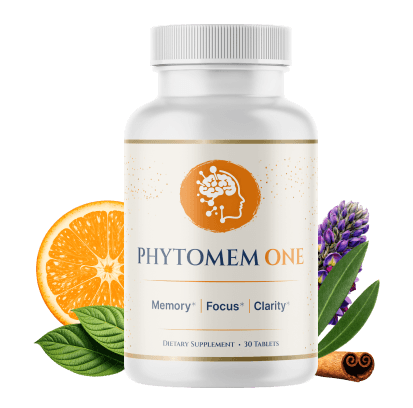
Table of Contents
What Are the Ingredients in Phytomem One?
The verified list supplied for this site includes:
- Saffron Extract (Crocus sativus L.)
- Fucoxanthin (Japanese Sea Kelp)
- Fucoidan (Japanese Sea Kelp)
- Oleuropein (Olive Leaf Extract)
- Berberine HCl
- Ceylon Cinnamon Bark (Cinnamomum verum)
- Corosolic Acid (Banaba Leaf)
- Kudzu Flower Extract
- Morosil (Sicilian Red Orange Extract)
- Xylitol. Non-GMO
- stimulant-free
- 100% natural. One capsule daily with food.
How Are the Ingredients Organized?
Ingredients can be grouped by the roles described in the product positioning, but this page avoids claiming a biological mechanism unless the verified facts support it.
Major Ingredients & Features Explained
Saffron Extract (Crocus sativus L.) in Phytomem One
A botanical extract included as part of the formula's daily brain-support positioning.
Fucoxanthin in Phytomem One
A compound from Japanese sea kelp that contributes to the formula's marine-derived ingredient profile.
Fucoidan in Phytomem One
A Japanese sea kelp component included among the formula's marine-derived ingredients.
Oleuropein in Phytomem One
A compound from olive leaf extract included as part of the botanical blend.
Berberine HCl in Phytomem One
A berberine form included as one of the formula's selected components.
Ceylon Cinnamon Bark (Cinnamomum verum) in Phytomem One
A cinnamon botanical included to broaden the formula's plant-based ingredient profile.
Corosolic Acid in Phytomem One
A compound from banaba leaf included as one of the formula's botanical components.
Are Phytomem One Ingredients Safe?
Safety depends on the specific ingredient, amount, individual circumstances, medication use, allergies, and label directions. Review the current label and consult a qualified professional when appropriate.
Phytomem One Ingredients vs Alternatives
Compare verified ingredient lists and disclosed amounts rather than relying on generic claims about “typical competitors.” Ingredient count alone does not determine quality or suitability.
Frequently Asked Questions
What is Phytomem One?
Phytomem One is a dietary supplement designed to support memory, focus, mental clarity, and cognitive function. It contains 10 listed ingredients organized into three formula groups.
How do you take Phytomem One?
The recommended use shown for the product is one capsule daily with food. Follow the product label and consult a qualified healthcare professional if you have questions about using it with your personal routine.
Is Phytomem One stimulant-free?
Yes. Phytomem One is presented as stimulant-free, making that feature relevant for shoppers who prefer a non-stimulant daily formula.
What ingredients are in the formula?
The formula includes saffron extract, fucoxanthin, fucoidan, oleuropein, berberine HCl, Ceylon cinnamon bark, corosolic acid, kudzu flower extract, Morosil, and xylitol.
Is Phytomem One a subscription?
No. The available purchase options are one-time payments rather than a recurring subscription. Checkout is handled by ClickBank through the current offer page.
What package options are available?
The listed options are 2 units: 8 total ( per unit); 3 units: 7 total ( per unit); and 6 units: 4 total ( per unit). Shipping terms differ by package, so review the offer details before checkout.
What does the 60-day guarantee cover?
Every order is covered by a 60-day money-back guarantee. The current offer page should be consulted for the specific return process and applicable terms.
Can Phytomem One diagnose or treat a medical condition?
No. Phytomem One is a dietary supplement and is not intended to diagnose, treat, cure, or prevent any disease. Results may vary.
Want to see how the Phytomem One formula fits the full offer?
Check Current Phytomem One Pricing →Conclusion
The Phytomem One formula should be evaluated from the actual ingredient list, label directions, relevant research context, and personal fit.
Scientific References
- Zielińska-Nowak E, Cichon N, Saluk-Bijak J et al.. Nutritional Supplements and Neuroprotective Diets and Their Potential Clinical Significance in Post-Stroke Rehabilitation. Nutrients. 2021 Aug 5.
- Park HA, Hayden MM, Bannerman S et al.. Anti-Apoptotic Effects of Carotenoids in Neurodegeneration. Molecules (Basel, Switzerland). 2020 Jul 29.
- Tylawsky DE, Kiguchi H, Vaynshteyn J et al.. P-selectin-targeted nanocarriers induce active crossing of the blood-brain barrier via caveolin-1-dependent transcytosis. Nature materials. 2023 Mar.
- Bligh M, Silva-Solar S, Biehler L et al.. De Novo Glycan Annotation of Mass Spectrometry Data. Journal of the American Society for Mass Spectrometry. 2025 Aug 6.
- Fekete M, Jarecsny T, Lehoczki A et al.. Mediterranean Diet, Polyphenols, and Neuroprotection: Mechanistic Insights into Resveratrol and Oleuropein. Nutrients. 2025 Dec 16.
- Imran M, Nadeem M, Gilani SA et al.. Antitumor Perspectives of Oleuropein and Its Metabolite Hydroxytyrosol: Recent Updates. Journal of food science. 2018 Jul.
- Zhou J-f, Zhang M-r, Wang Q et al.. Two novel compounds inhibit Flavivirus infection in vitro and in vivo by targeting lipid metabolism. Journal of virology. 2024 Sep 17.
- Kao CY, Shih HY, Hsieh YH et al.. Synergistic increase in anti-cancer stemness activity and pro-apoptotic effects in human glioblastoma cancer stem-like cells by combination treatment with temozolomide and corosolic acid. International journal of medical sciences. 2025.
References provide context for individual ingredients or topics and do not establish that the product itself has been clinically proven.